

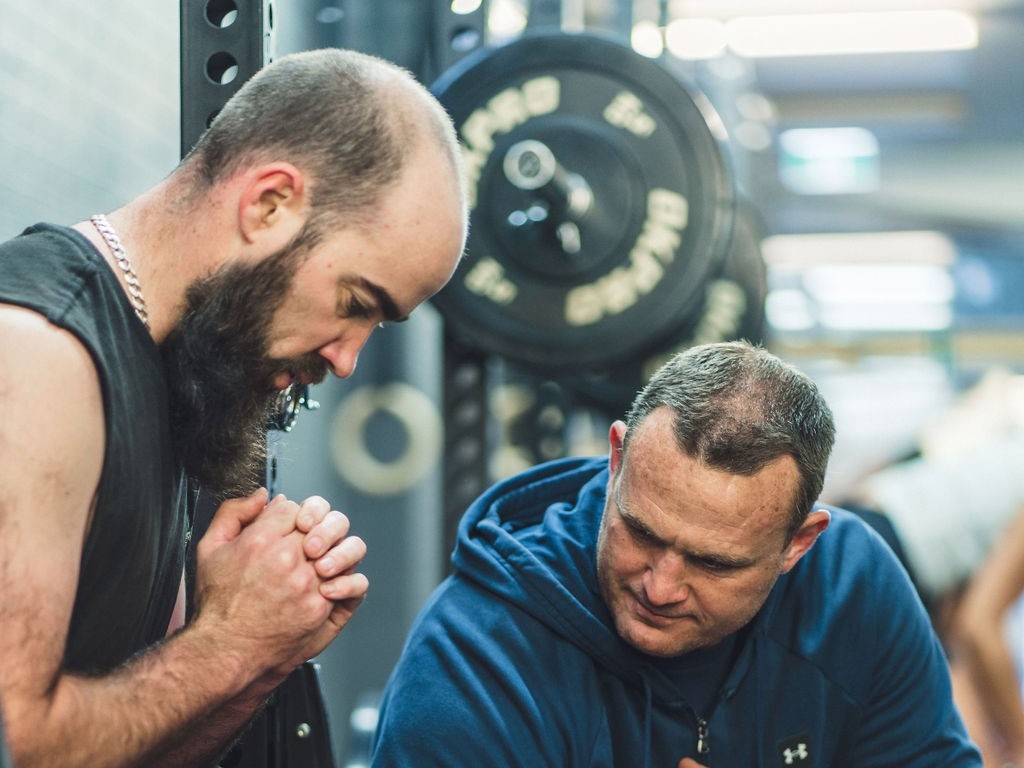
Walking into a gym for the first time, or coming back after years off, you face the same problem: you don't yet know what you don't know. A barbell looks straightforward until your lower back tells you otherwise. That's not a scare story, it's the reason having a coach right there on the floor, watching your movement in real time, changes the whole experience.
What a coach actually does during a class
Coaching isn't just demonstrating an exercise at the start and stepping back. At LIFT Gym Wangara, Chris or Lisa is on the floor for the full 45 minutes, adjusting technique, offering lower intensity options when you need them, and checking in before the session starts about any injuries or limitations. The coached strength and conditioning classes are built so your weights are set before you start, each exercise is shown to you, and your coach can step in the moment your form changes. That last part matters more than most people realise.
Why form matters more for beginners than for anyone else
Experienced lifters have hundreds of hours of movement patterns already grooved in. Beginners don't. Without coaching, the natural tendency is to compensate: if your hip flexors are tight, your lower back takes the load instead. If your shoulder mobility is limited, your wrist or elbow picks up the slack. These compensations are invisible to you and obvious to a trained eye. Tom N., a LIFT member, put it plainly: "They actually care about your progress and take the time to help you get your form right so you don't wreck yourself trying to lift heavy." Getting the pattern right early means you can keep adding load later without undoing everything.
Does watching every rep make classes slower or harder?
No. Every person in the class trains in their own space, so nobody is waiting on you to finish a set before they can move. Your coach tailoring an exercise to your ability doesn't slow anyone else down. If anything, having the exercise set to the right level means you can work harder relative to your own baseline, without the hesitation that comes from being unsure whether you're doing it right. Lower intensity options are always available, and you take as much rest as you need. The coaching adjusts to you, not the other way around.
How do coached classes compare to a self-directed gym membership?
A standard gym membership gives you access to equipment and trusts you to know what to do with it. That works well if you already have a structured programme, solid technique, and the self-awareness to notice when something goes wrong. For most beginners, none of those three things are in place yet. Self-directed training isn't inherently dangerous, but the feedback loop is slow: you might lift with a rounded back for months before you feel the consequence. A coach compresses that feedback loop to the same session, or the same rep. Chris holds a Certificate III and IV in Fitness and a Bachelor of Exercise and Sport Science from the University of Western Australia. Lisa holds a group training qualification alongside her yoga teacher training. Chris has been coaching for 18 years and Lisa for 7. That kind of experience means a movement problem is spotted and corrected before it becomes a habit.
The check in before class does more work than it looks like
Members arrive 10 to 15 minutes before their session, and that time has a purpose. Your coach uses it to go through any changes to your programme, note anything that's sore, and set up your weights. New members also complete a short pre-exercise questionnaire that a coach reviews. If your physio has told you to go easy on one side, or your shoulder has been grumbling since the weekend, the coach knows before the first rep. The alternative, turning up and hoping nothing flares up, is what gets people injured and then off training for weeks. This is also when returning members, people coming back after a long break or an operation, can have an honest conversation without feeling like they're holding up the room.
What this means for people who are nervous walking in
Nervousness in the gym almost always comes from one fear: looking like you don't know what you're doing. Coached classes dissolve that, because not knowing is built into the model. You're expected to need the exercise demonstrated. You're expected to take the lower intensity option. Roshni H., a LIFT member who had never set foot in a gym before, said: "The team made it so easy to settle in." Nicole C., returning to weights after years off, said Chris, Lisa and the other members were "so welcoming and supportive." The coaching structure removes the guesswork so that the only thing you need to bring is the willingness to start from where you are.
Frequently asked questions
Is a coach really on the floor for the whole 45 minutes, or just at the start?
Chris or Lisa coaches the full 45 minute session, not just the warm up demonstration. Your coach is on the floor with you the entire time, adjusting technique, offering alternatives and checking in as the class moves through each exercise.
I have an old injury. Will a coach know how to work around it?
You fill in a short pre-exercise questionnaire before your first class, and a coach reviews it. During the arrival window before each session, you can let the coach know what's sore or restricted, and they adjust your exercises from there. Chris and Lisa both list injury rehabilitation as a focus area, and lower intensity options are always available.
What if I can't keep up with the rest of the class?
Everyone has their own training space, so there is no keeping up. Each person works at their own level, takes their own rest, and has their weights set to suit them. The coaching model is built around finding your baseline and working from there, not pushing you to match anyone else in the room.
Do I need any experience before my first coached session?
None at all. Your first session at LIFT is free, and it starts with your coach asking about your goals, your starting point, and any injuries. Every exercise is shown to you and set to your level. You don't need to get fit before you start.
How do I find out if coached classes suit me before committing to a membership?
Your first session is free, with no joining fee. If LIFT feels right, the 28 Day Kickstarter is $149 for 28 days of unlimited coached training. You can also book a free 15 minute call with Chris before you come in, at 0468 000 770.
Sources
This article draws on the following pages.